Orter: The Retro Display Font That Makes Graphics Pop
There is a specific kind of nostalgia that hits you when you see typography that feels like it belongs on a vintage movie poster or a faded café menu. In the current design landscape, where sleek, ultra-minimalist sans serif fonts dominate the web, there is a growing hunger for something with more texture and personality. This is where Orter steps in. It is not just another typeface; it is a statement piece designed to capture the warmth and energy of retro aesthetics while functioning as a modern, high-quality design asset.
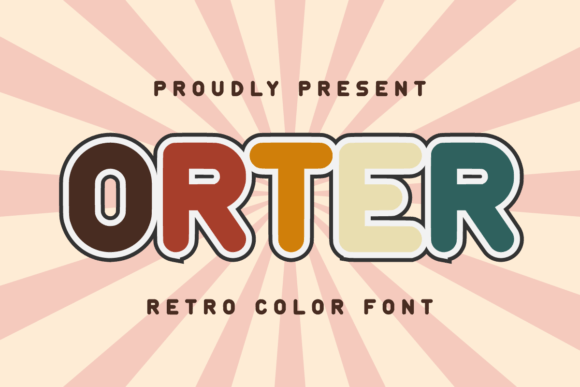
At its core, Orter is a color font, which immediately sets it apart from the standard black-and-white typefaces found in most default font libraries. But what makes it truly captivating is its visual construction. It combines the architectural stability of a serif font with the vibrant, chromatic flair of vintage sign painting. The letterforms feature distinct slab serifs and a structured baseline, but the real magic lies in the interior fills and the subtle imperfections that mimic the look of ink pressed onto textured paper. It possesses a "fun" factor that feels organic rather than manufactured. You can almost see the hand-painted origins in its curves and terminals. It balances boldness with a certain softness, making it approachable for audiences ranging from Gen Z trendsetters to those who genuinely remember the eras that inspired the font.
Why Retro Design Still Works in Modern Marketing
If you are a marketer or a small business owner, you might wonder why a retro style font like Orter is relevant today. The answer lies in trust and distinctiveness. In a digital world saturated with identical sans serif fonts, retro typography signals authenticity. It suggests a brand that values craftsmanship and has a story to tell. When used in brand identity work, Orter can instantly position a product as artisanal, fun, or creative.
Consider the visual hierarchy of a social media feed. A standard post using a generic typeface might blend into the background noise. A post featuring Orter, however, stops the scroll. The multi-colored aspect of the font creates an immediate focal point without the need for complex background illustrations. For entrepreneurs and content creators, this is a massive advantage. It allows you to create social media graphics that look intricate and professionally designed with minimal effort. The font does the heavy lifting, providing that "pop" of color and energy that usually requires hours of Photoshop work.
Practical Applications: Where Orter Shines
The versatility of a creative font like Orter is often underestimated. Because it is a display font, it is naturally suited for headlines, but its application goes far beyond simple titles. Here is where it fits best in your creative workflow:
- Packaging and Product Design: If you are selling physical goods, particularly in the food, beverage, or lifestyle sectors, Orter is a game-changer. It works beautifully for coffee labels, craft beer cans, or artisanal snack packaging. The premium font quality ensures that even when scaled up for large packaging design, the edges remain crisp and the colors vibrant.
- Editorial and Book Design: For indie publishers and bloggers, a cover needs to convey the genre instantly. Orter is perfect for cookbook covers, music magazines, or lifestyle zines. It brings a tactile quality to editorial design that digital readers appreciate.
- Merchandise and DIY: For the hobbyists and crafters, this font is ideal for print-on-demand projects. Think t-shirts, tote bags, and stickers. Because it is designed to look like a finished graphic, you don't need to add much else to the design to make it sellable.
- Logo Design: While you should always be cautious with color fonts in primary logos due to legibility constraints, Orter is excellent for secondary logos, wordmarks for events, or sub-brands. It gives a logo design an instant personality upgrade.
Mastering Font Pairings and Visual Hierarchy
One of the challenges with using a distinct typeface like Orter is ensuring it doesn't overwhelm the rest of your design. This is where font pairing becomes crucial. Orter has a loud voice; it needs a partner that knows how to listen.
For the best results, pair Orter with a clean, neutral typeface. A geometric sans serif font works exceptionally well for body copy, providing a modern contrast to Orter's vintage charm. For example, using a light-weight sans serif for your subheadings and body text allows Orter to dominate the headlines without causing visual clutter. Alternatively, if you want to lean into a more organic aesthetic, a simple script font or a handwritten font can be used sparingly to complement Orter's playful nature, though be careful not to create a "circus" effect. The goal is visual hierarchy: Orter grabs the attention, and the supporting font holds it.
Evaluating Fit and Readability Considerations
Before you commit to using Orter for a project, it is vital to evaluate the fit based on readability. Because Orter is a decorative display font, it is not designed for long paragraphs of text. Attempting to use it for body copy in web design or print will result in eye strain for your audience. Its strength lies in short bursts of impact—headlines, pull quotes, and call-to-action buttons.
When testing the font, look at the kerning (the space between characters) and how the letters interact. In a word like "BOLD," the curves of the 'B' and 'D' should frame the 'O' and 'L' harmoniously. If you are designing for small screens, ensure that the specific color combinations included in the font file remain legible against your background. While modern typography tools make it easy to swap colors, the default palette of Orter is usually optimized for maximum contrast.
Licensing and Professional Use
Finally, as a professional designer or business owner, you must address the technical side of assets. Orter is a commercial font, which means you need to ensure you have the correct license for your intended use. If you are creating merchandise to sell, you need a license that covers commercial reproduction. If you are a designer creating a brand identity for a client, you need to ensure the client is covered or purchases their own license.
Always check the specific file formats included. A high-quality font package will usually include the OpenType-SVG format (which powers the color functionality) as well as a standard OTF or TTF version for backward compatibility. This ensures that even if a user’s system doesn't support color fonts, they will still see a stylized, retro outline version of your text, maintaining the integrity of your brand identity.
Ultimately, Orter is more than just a collection of glyphs; it is a tool for storytelling. Whether you are refreshing a brand identity, launching a new product line, or simply looking to inject some fun into your personal projects, this font offers a bridge between the golden age of design and the digital present. It proves that typography doesn't have to be serious to be professional.