Merry Jolly: A Graffiti Font for Urban Christmas
Breaking Away from Traditional Holiday Typography
Most Christmas designs fall into a predictable trap: ornate serifs, flowing scripts, or overly whimsical handwritten fonts that feel pulled straight from a Victorian greeting card. There’s nothing wrong with those approaches, but they’ve become so saturated that they blend into the visual noise of the holiday season. Merry Jolly takes a completely different direction. This is a graffiti-styled display font that brings street art energy to Christmas-themed projects, and it fills a gap many designers didn’t even realize existed.
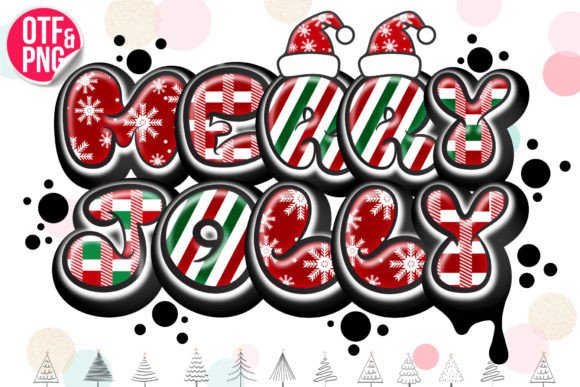
At its core, Merry Jolly is a premium font built around the idea that holiday design doesn’t have to feel stuffy or overly traditional. The letterforms carry the bold, angular characteristics of urban graffiti while weaving in festive elements that immediately communicate a Christmas theme. Think spray-paint texture meeting candy cane color palettes. The result is a creative font that feels both rebellious and celebratory—something that speaks to audiences who appreciate design that doesn’t follow the crowd.
What Makes This Typeface Visually Distinct
Merry Jolly’s visual personality is hard to miss. The characters have weight and presence, with thick strokes that command attention in any layout. There’s an inherent rhythm to the letterforms that mimics the spontaneous energy of hand-drawn graffiti, yet the construction is deliberate enough to maintain legibility at various sizes. Each letter feels like it was crafted with intention, balancing the rawness of street art with the precision needed for professional design assets.
The color-ready nature of this display font makes it particularly versatile. Because the graffiti style naturally lends itself to bold, layered color treatments, designers can push it in multiple directions. A classic red and green palette reinforces the Christmas connection, while metallic golds and silvers give it a more premium feel. Some projects might benefit from unexpected color choices—electric blues or neon pinks—that lean into the urban aesthetic even further. The font handles all of these approaches gracefully.
What really sets Merry Jolly apart from other holiday typefaces is its refusal to be precious. Where a script font might evoke hand-lettered Christmas cards and a serif font might suggest tradition and formality, this graffiti-inspired face brings attitude. It tells viewers that whatever they’re looking at—whether it’s a product, an event poster, or a social media post—isn’t playing by the usual holiday rules.
Where Merry Jolly Finds Its Sweet Spot
The applications for this font span a surprisingly wide range. Packaging design for seasonal products is an obvious starting point. Think about craft breweries releasing winter ales, candy companies launching holiday editions, or small businesses creating gift sets. Merry Jolly on a label or box immediately signals that the product has personality. It works especially well for brands that position themselves as youthful, creative, or slightly irreverent—the kind of companies that want their holiday packaging to stand out on crowded shelves.
Social media graphics represent another natural fit. Instagram stories, Facebook event covers, TikTok overlays, and Pinterest pins all benefit from typefaces that stop the scroll. Merry Jolly does exactly that. Its bold weight and distinctive style cut through the endless stream of content, making it valuable for holiday promotions, event announcements, and seasonal campaigns. Digital marketers working with lifestyle brands, entertainment venues, or e-commerce stores will find it particularly useful for creating thumb-stopping visuals.
Logo design and brand identity projects occasionally call for seasonal variations, and this is where a font like Merry Jolly can really shine. A coffee shop might use it for their holiday menu boards and merchandise. A clothing brand could incorporate it into limited-edition winter collections. Event planners and entertainment companies frequently need bold, festive typography for Christmas parties, markets, and performances. The graffiti influence gives these applications an edge that more conventional holiday fonts simply can’t deliver.
Editorial design and publishing also benefit from this typeface. Magazine covers, blog headers, newsletter banners, and digital publications targeting younger demographics can use Merry Jolly to create holiday content that feels fresh rather than formulaic. The font pairs particularly well with photography and illustration, serving as a strong typographic anchor that complements rather than competes with visual content.
Practical Considerations for Working with This Font
Before incorporating Merry Jolly into any project, spend some time evaluating whether its personality aligns with the audience and message. This commercial font works brilliantly for brands and projects that embrace creativity, youth culture, or urban aesthetics. It’s less suited for luxury brands leaning into quiet elegance, formal corporate communications, or designs targeting audiences who expect traditional holiday imagery. Context matters enormously with a typeface this distinctive.
Font pairing is where many designers struggle with display typefaces like this one. Merry Jolly demands attention, so surrounding it with equally bold typefaces creates visual chaos. Instead, pair it with a clean sans serif font for body text and supporting information. Something like a geometric sans or a humanist sans provides enough contrast without fighting for hierarchy. Avoid pairing it with other decorative or handwritten fonts unless you’re deliberately going for a maximalist, layered aesthetic—and even then, proceed carefully.
Readability deserves honest assessment. As a display font, Merry Jolly is designed for headlines, titles, and short bursts of text—not for paragraphs or small-scale applications. Use it at larger sizes where its character shapes are fully visible and impactful. If you need to convey detailed information like pricing, dates, or fine print, switch to a more legible typeface. This isn’t a limitation; it’s how display fonts are meant to function within modern typography systems.
Take time to review all included styles, alternates, and glyphs before starting your project. Many premium fonts include alternate character sets, ligatures, or stylistic variations that can add visual interest and help you customize the look. Understanding what’s available upfront saves time during the design process and helps you get maximum value from the asset.
Licensing and Commercial Use
Always verify the licensing terms before using any font in commercial work. Most premium font licenses cover standard commercial applications—logos, packaging, digital ads, print materials, and merchandise—but some have restrictions on things like app embedding, broadcast use, or large-scale distribution. Read the license agreement specific to your purchase. If you’re working on behalf of a client, make sure the appropriate license is in place for their intended use. This protects everyone involved and ensures your work remains professional and legally sound.
Merry Jolly represents something genuinely different in the holiday design space. It acknowledges that Christmas design culture is broader than snowflakes and holly leaves, and it gives creative professionals a tool for reaching audiences who respond to urban aesthetics and bold visual language. Whether you’re designing packaging, building a seasonal campaign, or creating event materials, it offers a fresh perspective worth exploring. The only real limit is how far you’re willing to push the concept.