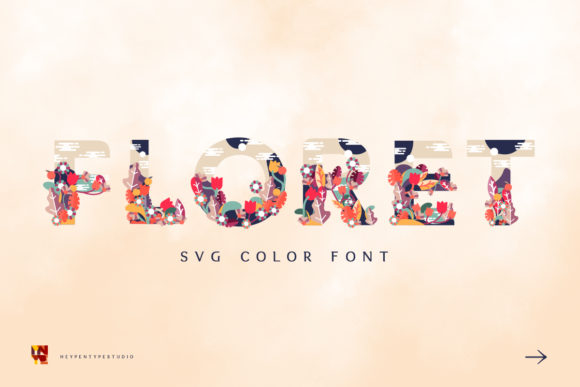
Floret: A Display Font for Your Boldest Summer Designs
There's a particular challenge in modern typography: how do you create something that feels both contemporary and timeless, bold yet refined? You need a typeface that commands attention without shouting, one that carries personality without sacrificing clarity. This is the space where Floret operates, and it does so with remarkable confidence. As a premium font designed for impact, Floret isn't just another decorative option—it's a strategic design asset that can genuinely elevate your creative work.
Understanding Floret's Visual Character
Floret is best described as a sophisticated display font with strong serif influences and a distinctly modern sensibility. Its letterforms feature elegant, slightly condensed proportions with high-contrast strokes—thick verticals meet delicate horizontals in a way that creates visual rhythm and movement. The terminals and serifs have subtle decorative flourishes that give Floret its personality without veering into overly ornate territory. This balance is what makes it so versatile: it reads as polished and intentional rather than fussy or dated.
What sets Floret apart from many creative fonts is its ability to feel both structured and organic simultaneously. The overall architecture of each glyph is grounded in solid typographic principles, yet there's an artful quality to the curves and connections that prevents it from feeling mechanical. Think of it as the typographic equivalent of a well-designed garden—orderly, but with enough natural beauty to feel alive. This quality makes Floret particularly effective for projects where you want to convey craftsmanship, care, and aesthetic sensitivity.
Where Floret Truly Shines
Let's talk practical applications. Floret excels in contexts where visual hierarchy matters and where you want your typography to carry emotional weight. Here's where I've seen it work exceptionally well:
- Logo design and brand identity: Floret has the distinctiveness needed for memorable logos, especially for brands in lifestyle, beauty, wellness, artisan food, and boutique retail. Its personality helps establish brand perception quickly—consumers will associate your visual identity with quality and taste before they even read your tagline.
- Editorial design and publishing: Magazine covers, book titles, chapter headings, and pull quotes benefit enormously from Floret's commanding presence. In editorial design, it creates natural visual anchors that guide readers through content and establish tone.
- Packaging design: Whether you're designing labels for a small-batch candle company or premium skincare, Floret brings an air of sophistication that communicates product quality. Its letterforms reproduce beautifully at various sizes, which matters when you're working across different packaging formats.
- Web design and digital experiences: Used strategically for headlines, hero text, and call-to-action elements, Floret can transform a standard website into something memorable. It pairs particularly well with clean sans serif fonts for body text, creating a visual contrast that keeps layouts dynamic.
- Social media graphics: In crowded feeds, distinctive typography stops the scroll. Floret works beautifully for quote graphics, announcement posts, promotional banners, and any content where you need immediate visual impact in a compact format.
- Event and stationery design: Wedding invitations, event programs, menu cards, and thank-you notes are natural homes for a font like Floret. Its elegance communicates occasion and importance without feeling stuffy.
How Floret Influences Your Design Outcomes
Typography choices ripple outward, affecting far more than aesthetics. When you select Floret for a project, you're making decisions about audience engagement, professionalism, and how your work will be perceived in competitive contexts. A carefully chosen display typeface signals that you've paid attention to details, and audiences—whether they're design-savvy or not—pick up on that care instinctively.
Consider brand recognition. Consistent use of a distinctive font like Floret across touchpoints—your website headers, social templates, printed materials, and packaging—creates a cohesive visual language. Over time, people begin to associate that typographic voice with your brand, even before they consciously register your logo. This kind of recognition is invaluable, particularly for small businesses and independent creators competing against larger, better-funded competitors.
Floret also affects visual hierarchy in practical ways. Its strong presence at display sizes naturally draws the eye, making it straightforward to establish clear reading paths in complex layouts. When your headlines carry this much visual weight, you can keep supporting text simpler and cleaner, knowing the hierarchy is already established through typographic contrast alone.
Practical Guidance for Working with Floret
Before committing to any premium font, it's worth evaluating fit thoughtfully. Start by reviewing the full character set and any included styles or weights. Does the font include the glyphs you need for your specific project? If you work internationally, check for extended Latin support and special characters. Examine how the numerals, punctuation, and ligatures look—these details separate truly professional typefaces from superficially attractive ones.
Font pairing is where many designers struggle, and Floret is no exception. Because it has such a strong personality, it benefits from restrained companions. Clean sans serif fonts with neutral character—think geometric or neo-grotesque styles—make excellent partners for body text. If you prefer a serif font for longer passages, choose something with low contrast and open forms that won't compete visually. Avoid pairing Floret with other expressive display fonts, script fonts, or handwritten fonts unless you have a very specific creative rationale. The goal is complementary contrast, not visual competition.
Readability deserves honest assessment. Floret is a display typeface, which means it's optimized for impact at larger sizes, not for extended reading at small scales. Use it for headlines, subheadings, and short text blocks where its personality enhances communication. For body copy, paragraph text, and anything requiring sustained reading, pair it with a more legible option. This isn't a limitation—it's simply understanding how to use each tool appropriately.
Finally, consider licensing carefully. If your project is commercial—and that includes client work, products for sale, monetized content, and business materials—you need a commercial font license that covers your specific use case. Review the license terms for web embedding, print production, and any derivative applications. Reputable foundries and font marketplaces make these terms transparent, and respecting them is both legally necessary and ethically important for supporting the designers who create these valuable resources.
Making Floret Work for Your Next Project
The best way to understand whether Floret suits your work is to experiment with it directly. Set your actual headlines, not placeholder text. Test it in your real color palette, on your actual materials—whether that's a website mockup, a printed proof, or a social media template. Typography behaves differently in context than it does in specimen sheets, and what looks stunning in isolation might feel wrong when placed alongside your photography, your brand colors, or your existing design system.
Pay attention to spacing and sizing. Floret's high-contrast letterforms may need generous line height and letter-spacing adjustments, particularly at larger display sizes. Small tweaks to tracking can dramatically affect how the font feels—too tight and the elegant details get lost; too loose and the text loses cohesion. These refinements are worth the effort because they're precisely what separates competent typesetting from exceptional typography.
Ultimately, Floret is the kind of typeface that rewards thoughtful application. It won't fix a weak design concept, but in the hands of someone who understands context, hierarchy, and audience, it becomes a powerful creative tool. For designers, marketers, publishers, and creators who want their summer projects—and every project beyond—to carry genuine visual distinction, Floret deserves serious consideration.