Sweet Potato Pie: A Whimsical Font for Creative Projects
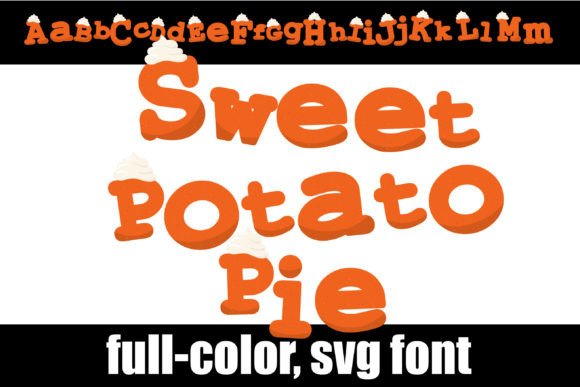
There are typefaces that serve a purely functional purpose, and then there are those that bring a distinct personality to the table. Sweet Potato Pie falls firmly into the latter category. It’s a color font, specifically an OpenType-SVG format, which means it carries its own vibrant palette of warm oranges, rich browns, and creamy whites right within the letterforms themselves. Imagine each character crafted to look like a slice of sweet potato, adorned with a dollop of whipped cream. It’s playful, textured, and immediately evokes a sense of cozy, homemade comfort. This isn't just a display font; it’s a design asset with a built-in visual story.
The appeal of Sweet Potato Pie lies in its unapologetic charm. It’s a creative font that feels handcrafted and authentic, perfect for projects aiming for a friendly, approachable, and slightly whimsical tone. The visual texture adds depth that flat-colored fonts can’t match, making it a standout choice for headlines and logos where you want to capture attention and evoke a specific mood. It speaks to a love of food, autumnal themes, rustic aesthetics, and heartfelt creativity. For designers, entrepreneurs, and crafters, it offers a shortcut to injecting personality into a project without complex custom illustrations.
Where This Flavorful Typeface Truly Shines
Understanding a font’s strengths is key to using it effectively. Sweet Potato Pie is a specialist, not a generalist. Its detailed, textured design means it’s optimized for larger point sizes where its unique characteristics can be appreciated. Think of it as the star of your typographic hierarchy, used for headlines, logos, short quotes, or pull-out text, rather than for body copy.
In brand identity and logo design, it’s a fantastic fit for businesses that want to project warmth and authenticity. A bakery specializing in pies, a farm-to-table restaurant, a cozy café, a children’s brand, or a lifestyle blog focused on home cooking could build a memorable identity around this typeface. Its inherent style helps in brand recognition, making a business instantly feel more personal and relatable.
For marketing and social media graphics, Sweet Potato Pie can make posts and ads pop. Use it for Instagram story headers, Pinterest pins promoting recipes, or Facebook ads for seasonal promotions. Its visual weight naturally creates a strong focal point, helping to establish visual hierarchy and guide the viewer’s eye to the most important message. In packaging design, it could be perfect for a artisanal jam label, a spice mix box, or a recipe card booklet, reinforcing the product’s homemade quality.
Beyond commercial use, it’s a joy for personal projects. Think custom invitations for a fall harvest dinner, personalized recipe books, scrapbook layouts, or DIY wall art. For bloggers and content creators, it can style chapter headings in an e-book or decorate a digital media kit, adding a layer of professional polish with a distinct personality.
Practical Guidance for Using a Decorative Font
Adding a specialty font like this to your toolkit requires a bit of strategic thinking to ensure it enhances rather than overwhelms your design. The first step is always to evaluate project fit. Does your client’s brand voice align with a playful, food-themed aesthetic? Is the project’s goal to feel approachable and fun? If the answer is yes, you’re on the right track.
One of the most critical steps is testing font pairings. A bold, decorative display font like Sweet Potato Pie needs a complementary partner for longer text. A clean, neutral sans serif font is often an excellent choice, providing a clear contrast that ensures readability for body copy. A simple serif font could also work for a slightly more traditional, yet still warm, feel. The key is balance; let the sweet potato font do the heavy lifting for impact and use its partner for clarity.
Always review the included styles and characters. Check for the full set of uppercase, lowercase, numbers, and punctuation to ensure it meets your project’s needs. Readability is paramount—preview your text at the intended size to make sure every character is clear. Because it’s a premium font, you’re investing in quality, but testing is still a non-negotiable step in a professional workflow.
Finally, be mindful of licensing. Confirm the font’s commercial licensing terms cover your intended use, whether it’s for a client’s logo, merchandise for sale, or a digital product. Understanding the license protects both you and your client and ensures you can use this delightful asset with full confidence.
In the world of modern typography, having a diverse library of design assets is crucial. Sweet Potato Pie isn’t a font you’ll use for every project, but for the right one, it’s invaluable. It’s a tool for injecting instant character, creating memorable visuals, and connecting with an audience on a sensory level. Used thoughtfully, it can transform a simple design into something that feels genuinely special and full of flavor.