Rainbow Unicorn: A Creative Font That Delivers Joy
In a world saturated with serious sans-serifs and traditional serif fonts, finding a typeface that genuinely captures attention and evokes a specific emotion can be a challenge. As a designer, I often see brands struggle to balance professionalism with personality, especially when trying to connect with a younger or more creative demographic. This is where the Rainbow Unicorn font steps in. It is a premium font option that breaks away from the rigid structures of modern typography to offer something that feels alive, friendly, and undeniably charming.
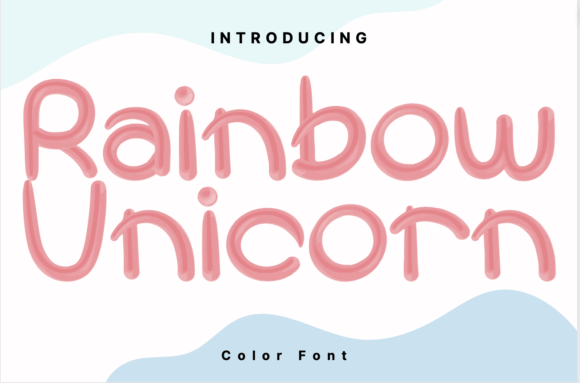
Visually, Rainbow Unicorn is a creative font that embraces a whimsical aesthetic without sacrificing legibility. It is designed to mimic the fluidity of a handwritten font, featuring soft, rounded edges and a bouncy baseline that gives the text a sense of movement. The defining characteristic, however, is its color capabilities. Unlike standard typefaces that require you to manually apply gradients or textures, Rainbow Unicorn is a color font that comes pre-loaded with a vibrant palette. Think pastel rainbows, soft pinks, and iridescent blues that blend seamlessly into one another. It is the typographic equivalent of a smile—immediate, bright, and infectious. This style sits perfectly between a playful script font and a readable display type, making it versatile enough for various applications where you need to convey joy and approachability.
Strategic Applications for Branding and Marketing
While it is tempting to use a font this fun everywhere, the key to successful brand identity is context. Rainbow Unicorn is not designed for long-form body text or dense legal documents. Instead, it shines as a display font used for headlines, pull quotes, and graphic overlays. If you are a small business owner looking to inject some personality into your logo design, this typeface offers a strong foundation for brands in the children’s entertainment, baking, stationery, or lifestyle sectors. It tells your audience immediately that you are approachable and creative.
For marketers and content creators, the utility of Rainbow Unicorn extends heavily into social media graphics. Platforms like Instagram and TikTok are visual-first environments where stopping the scroll is the primary goal. Using this font for a sale announcement or a motivational quote creates an instant focal point. Because it is a color font, it saves you the time of manually creating text effects in Photoshop or Illustrator; you simply type, and the style is applied. This efficiency is invaluable for entrepreneurs who need to produce high-quality content quickly.
Furthermore, consider the impact on packaging design. If you are selling physical goods, the shelf appeal is critical. A product featuring Rainbow Unicorn on its label signals that the item is fun, perhaps edible, or intended for creative use. It works beautifully for headers on web design elements, such as sale banners or newsletter sign-up forms, where you want to lower the barrier to entry and make the interaction feel less transactional and more personal.
Mastering Font Pairing and Hierarchy
One of the most common mistakes I see with decorative typefaces is a lack of balance. Rainbow Unicorn is a high-impact font; it demands attention. Therefore, it requires a grounding partner. Effective font pairing is about contrast. You should avoid pairing it with other playful fonts like a handwritten font or a distinct script font, as this will create visual chaos and destroy readability.
Instead, pair Rainbow Unicorn with a clean, neutral sans-serif font or a classic serif font. For example, using a geometric sans-serif for your subheadings and body copy allows the colorful display font to take center stage without overwhelming the viewer. This approach helps establish a clear visual hierarchy, guiding the reader's eye from the headline (Rainbow Unicorn) to the supporting information (the neutral typeface). This balance ensures your design retains a sense of professionalism while still embracing the whimsy of the primary font.
Practical Evaluation and Implementation
Before integrating Rainbow Unicorn into your next project, there are a few practical considerations to ensure it aligns with your goals. First, review the licensing. Since this is a commercial font, you need to ensure your license covers your specific usage, whether that is for a single client project, a logo that will be trademarked, or a mass-produced product line. Reputable foundries usually offer different tiers for this.
Next, evaluate the specific weights and styles included in the family. Some premium fonts come with alternates, ligatures, or swashes that can add even more flair to your editorial design or headers. Take the time to explore these OpenType features. However, a word of caution on readability: test the font at the size it will be viewed. While it is legible for headlines, complex color fonts can sometimes lose detail if scaled down too small on digital screens. Always preview your work on mobile devices to ensure the colors render correctly across different operating systems.
Finally, think about the long-term consistency of your design assets. If you use Rainbow Unicorn for a holiday campaign, ensure it fits within the broader visual language of your brand. It should feel like a celebration of your brand's personality, not a departure from it. When used thoughtfully, this typeface does more than just spell out words; it creates an atmosphere. It transforms a standard invitation into a magical experience and a simple social post into a piece of engaging art.