Blobsy Bubble Gum: A Playful Asset for Kid-Focused Design
In the crowded landscape of modern typography, finding a typeface that genuinely captures a sense of youthful exuberance can be a challenge. Most designers default to standard sans serif font options or rounded geometric shapes to achieve a friendly vibe, but these often lack distinct personality. Enter Blobsy Bubble Gum, a premium font that steps away from the rigidity of traditional letterforms to deliver something much more tactile and energetic. This isn't just another display font; it is a statement piece designed to inject instant fun into your visual hierarchy.
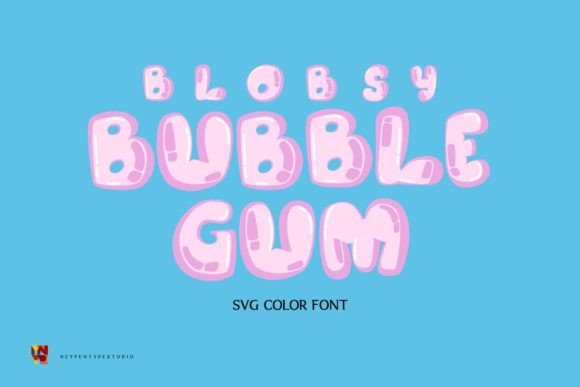
Visually, Blobsy Bubble Gum is defined by its substantial presence. It is a bulky and chunky typeface, yet it avoids feeling heavy or oppressive. The designers have managed to balance its weight with soft, rounded terminals and exaggerated curves that mimic the organic expansion of a blowing bubble. Because this is an Opentype-SVG color font, the texture is baked directly into the letterforms. You aren't just getting black outlines; you are getting a sweet, playful pink bubble gum color pattern that requires no manual gradient application. This feature sets it apart from standard creative fonts, offering a three-dimensional depth that flat vector text simply cannot achieve.
Strategic Applications for Visual Storytelling
Understanding where to deploy a font like Blobsy Bubble Gum is key to effective brand strategy. Because of its distinct visual weight and color, it functions best in high-impact scenarios where you need to grab attention immediately. Think of it as the headline act, not the supporting cast. For entrepreneurs and marketers in the children’s sector, this typeface is a powerful tool for establishing an immediate emotional connection. It signals safety, playfulness, and creativity without needing a single word of copy to explain it.
Here are a few practical scenarios where this font excels:
- Packaging Design: If you are developing product packaging for toys, candy, or children’s apparel, Blobsy Bubble Gum creates a focal point that jumps off the shelf. Its chunky silhouette ensures legibility even from a distance.
- Social Media Graphics: In the fast-scrolling environment of Instagram or TikTok, standard typography often gets ignored. Using this font for event announcements or sale graphics can stop the scroll, particularly for family-oriented bloggers and influencers.
- Editorial Design: School magazines, educational worksheets, and activity books benefit from a typeface that feels approachable. It reduces the "intimidation factor" of reading for younger audiences.
- Logo Design: For businesses catering to parties, play centers, or tutoring services, this font provides a ready-made personality. It acts as a cornerstone of a brand identity that needs to feel warm and inviting.
The Technical Reality: Compatibility and Usage
While the aesthetic appeal of Blobsy Bubble Gum is obvious, the technical execution requires attention to detail. As an experienced designer or crafter, you know that not all fonts behave the same way across different software ecosystems. This is a critical distinction for this specific product: it is a color font utilizing SVG technology.
This means the font files (OTF and TTF) contain embedded graphics to render that signature pink color pattern. Consequently, software compatibility is the deciding factor in your workflow. Blobsy Bubble Gum is fully compatible with PhotoShop, Illustrator, Silhouette, and Inkscape. These programs support the rendering of SVG data, allowing you to see the full color and texture immediately upon typing.
However, it is vital to note the limitations to avoid workflow bottlenecks. This product is not compatible with Cricut machines or software. Cricut Design Space does not currently support the SVG data required to render color fonts, meaning it will likely default to a standard outline or fail to register the typeface correctly. If you are a crafter relying on Cricut hardware, you would need to convert the text to a standard path in a program like Illustrator first, though you would lose the editability of the text. For a deeper dive into managing these specific file types, consulting the Ultimate Font Guide provided by the creator is highly recommended.
Pairing and Professional Polish
One of the most common mistakes with novelty or display fonts is using them for body copy. Blobsy Bubble Gum is designed for impact, not for long-form readability. Its chunky nature makes it excellent for short bursts of text—headlines, sub-headers, and call-to-action buttons. However, if you try to write a paragraph with it, you risk overwhelming the viewer and causing eye strain.
To maintain a professional look, you must master the art of font pairing. Because Blobsy Bubble Gum is so expressive and round, it pairs best with a clean, neutral companion.
- Sans Serif Pairing: A simple, geometric sans serif font (like a clean Helvetica or a modern minimalist typeface) works well. The simplicity of the sans serif provides a visual "breathing room" that balances the energy of the bubble gum text.
- Script Font Caution: Avoid pairing it with other playful script fonts or handwritten fonts. Combining two "loud" voices creates visual noise and confusion, diluting your message.
When evaluating your project fit, consider the "tone of voice" of your brand. If your brand identity is serious, corporate, or minimalist, Blobsy Bubble Gum will clash with your existing design assets. However, if your brand strategy leans toward being approachable, family-friendly, or whimsical, this font adds a layer of authenticity that generic commercial fonts lack.
Ultimately, Blobsy Bubble Gum is more than just a collection of letters; it is a design tool that bridges the gap between digital text and physical texture. By leveraging its SVG capabilities in compatible software like Illustrator or Photoshop, you can create visuals that feel tangible and engaging. Just remember to respect the technical constraints, choose your pairings wisely, and let the font do what it does best—bring a smile to the viewer's face.